
What is Lab-Grown Meat?
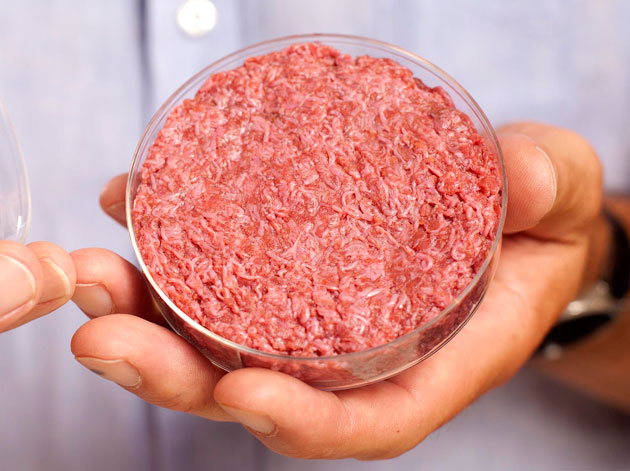
The idea of meat grown from cells in a lab sounds strange. This isn't about Frankenstein’s monster; it’s about cellular agriculture, a way to produce meat without raising and slaughtering animals. Scientists take cells from a living animal – a cow, a chicken, a pig – and grow them in a controlled environment. Think of it like brewing beer, but instead of yeast, you’re cultivating muscle tissue.
The process starts with a small sample of cells, often taken painlessly from an animal. These cells are placed in a nutrient-rich "growth medium’ – food for the cells – and encouraged to multiply. They"re grown in bioreactors, large vessels that provide the optimal conditions for cell growth. Over time, these cells proliferate and differentiate into muscle, fat, and other tissues that make up meat. The goal is to create a product that is biologically identical to conventionally produced meat.
Scientists have been experimenting with growing meat cells since the late 1990s, but the technology only recently became sophisticated enough to make it a realistic possibility. In 2020, Eat Just, Inc. received the world’s first regulatory approval to sell cultured meat – their GOOD Meat chicken – in Singapore. The FDA established a framework for the safety evaluation of human food made with cultured animal cells in the US in 2023. As of early 2024, the FDA has granted a "no questions" response to Upside Foods and GOOD Meat, but full market access is still pending USDA approval.
Nutrition: Is It Really Meat?
A key question for anyone focused on health is whether lab-grown meat is nutritionally equivalent to conventional meat. The goal is to replicate the protein, fats, vitamins, and minerals found in conventional meat. Because it's real animal cell tissue, it should provide the same essential nutrients.
Cellular agriculture allows for precise control over the meat's composition. We could engineer lab-grown meat with healthier fats – more omega-3s, less saturated fat – or add specific nutrients like vitamin D. The PMC article, "Flesh Without Blood: The Public Health Benefits of Lab-Grown Meat" (pmc.ncbi.nlm.nih.gov), details the potential for reducing zoonotic disease risk and improving nutritional profiles through this technology.
Some debate whether lab-grown meat qualifies as "real’ food, arguing that its lack of animal raising and slaughter makes it fundamentally different. Biochemically, however, it is the same tissue. While considering it ‘real" is a personal philosophy, nutritional science suggests it can be as healthy, and potentially healthier, than conventional meat.
- Protein: Comparable to conventional meat.
- Fats: Can be tailored for a healthier profile.
- Vitamins & Minerals: Should be similar, with potential for fortification.
- Potential Additives: Growth medium composition needs careful consideration.
Nutritional Comparison: Cultured vs. Conventional Meat (per 100g serving)
| Meat Type | Protein (g) | Fat (g) | Iron (mg) | Vitamin B12 (µg) |
|---|---|---|---|---|
| Conventional Beef (80% lean) | 26-29 | 12-20 | 2.6-3.2 | 2.6-3.0 |
| Lab-Grown Beef (projected) | 25-28 | 8-15 (adjustable) | 2.5-3.0 | 2.4-2.8 |
| Conventional Chicken (skinless breast) | 30-31 | 3-4 | 0.7-0.9 | 0.3-0.4 |
| Lab-Grown Chicken (projected) | 30-32 | 2-5 (adjustable) | 0.8-1.0 | 0.3-0.5 |
| Conventional Beef (70% lean) | 27-30 | 20-28 | 2.8-3.5 | 2.8-3.2 |
| Conventional Chicken (with skin) | 24-26 | 8-12 | 0.6-0.8 | 0.2-0.3 |
Illustrative comparison based on the article research brief. Verify current pricing, limits, and product details in the official docs before relying on it.
Picky Eater Concerns: Texture and Taste
Okay, let's be honest: nutritional equivalence doesn’t matter if it doesn't taste good. This is the biggest hurdle for lab-grown meat, and the biggest concern for picky eaters. Replicating the complex texture and flavor of meat is incredibly challenging. Conventional meat gets its flavor from a combination of factors – the animal’s diet, its breed, how it was raised, and the way it’s cooked.
Companies are experimenting with different growth mediums and scaffolding materials to create the right texture, or adding plant-based fats and flavors to enhance taste. Early tasters report mixed results, with some finding it indistinguishable from conventional meat and others noting a slight difference in flavor depth.
Taste is subjective. The first generation of lab-grown meat products may not appeal to everyone as the technology is still evolving and companies are constantly working to improve taste and texture. Expect variations between brands and meat types.
Health Benefits Beyond Nutrition
Lab-grown meat offers health benefits beyond its nutritional profile, including a reduced risk of foodborne illnesses. Conventional meat can be contaminated with harmful bacteria like E. coli and salmonella, but lab-grown meat, produced in a sterile environment, has a significantly lower risk of contamination.
Lab-grown meat could eliminate the routine use of antibiotics in meat production. Antibiotics are often used in livestock to prevent disease and promote growth, contributing to antibiotic-resistant bacteria. Lab-grown meat doesn't require antibiotics, helping combat this public health threat. The PMC article highlights these gains.
The long-term health impacts of consuming lab-grown meat are not yet fully understood, as it is a new technology. More research is needed.
The 2026 Landscape: What to Expect
So, what will lab-grown meat look like in 2026? The biggest challenge right now is regulatory approval. While the FDA has given the "no questions’ signal to a few companies, USDA approval is still needed for full market access. This process is complex and time-consuming, but it"s essential to ensure the safety and quality of the product.
Several companies are leading the charge, including Upside Foods and GOOD Meat. Others, like Aleph Farms and Mosa Meat, are also making significant progress. They face challenges in scaling up production and reducing costs. Currently, lab-grown meat is very expensive to produce, but prices are expected to come down as the technology improves.
In 2026, expect to see lab-grown meat available in a limited number of restaurants and specialty stores. It likely won’t be a mainstream option just yet, but it will be a step in that direction. Price points will still be higher than conventional meat, potentially in the $50-$100 per pound range, but that could vary significantly depending on the product and the company. It's unlikely to replace traditional meat entirely, but it could establish itself as a premium, sustainable alternative.
Ethical Considerations for the Conscious Eater
For many, the appeal of lab-grown meat lies in its ethical implications. It offers the potential to significantly reduce the environmental impact of meat production. Conventional livestock farming is a major contributor to greenhouse gas emissions, deforestation, and water pollution. Lab-grown meat requires far less land and water, and produces fewer emissions.
Animal welfare is another key consideration. Lab-grown meat eliminates the need to raise and slaughter animals for food. This addresses a major ethical concern for many people. However, it’s important to acknowledge that the initial cell samples still come from animals. Some argue that this is still exploitative, while others believe it’s a reasonable trade-off.
There are also new ethical concerns that arise with this technology. For example, who controls the intellectual property rights to cell lines? Could this lead to monopolies and limit access to this technology? These are important questions that need to be addressed as lab-grown meat becomes more widespread. A balanced view requires acknowledging both the potential benefits and the potential drawbacks.
Would you try lab-grown meat if it was available at your local grocery store?
Vote below!
Making the Switch: Tips for Picky Eaters
Intrigued but hesitant? Here’s some advice for picky eaters considering trying lab-grown meat. Start small. Don’t try to replace all your meat with lab-grown alternatives overnight. Begin with blended products – ground meat that’s partially lab-grown and partially conventional.
Focus on familiar flavors and textures. Choose products that are seasoned and prepared in ways you already enjoy. A lab-grown burger with your favorite toppings is a good starting point. Don’t go in with preconceived notions. Try to approach it with an open mind.
Remember that early products may not be perfect. The technology is still developing, and taste and texture will continue to improve. But even if you don’t love the first product you try, don’t give up entirely. Experiment with different brands and different types of meat. Be patient, and you might be surprised.
Resources and Further Reading
Want to learn more? Here are some helpful resources. The FDA provides detailed information on the regulatory framework for cultured animal cells: The PMC article, "Flesh Without Blood" (pmc.ncbi.nlm.nih.gov), offers a comprehensive overview of the public health benefits. You can also find more information on the websites of leading companies like Upside Foods () and GOOD Meat ().


No comments yet. Be the first to share your thoughts!